
Reviewed for clarity: August 08, 2026
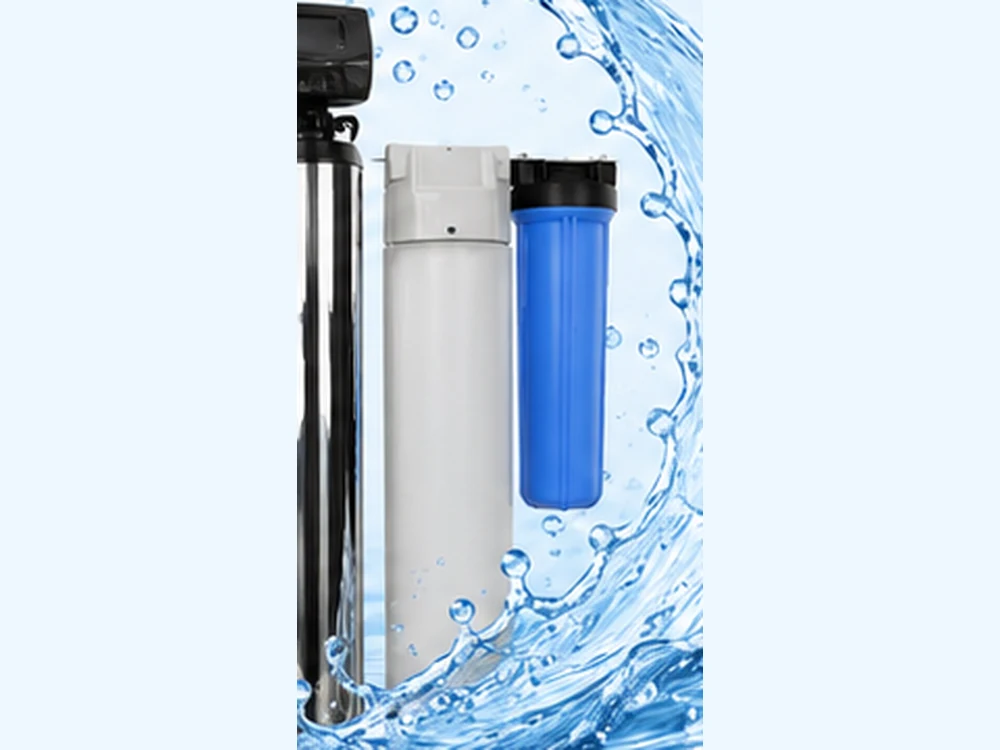
A filter housing should be selected as part of a hydraulic system. Cartridge surface area, housing diameter, length, port size, valve and fitting size, pressure rating, and the planned cartridge all affect flow and maintenance.
What this term means
The housing holds the cartridge and seals the pressurized water path. A large housing with small ports or a restrictive cartridge can still limit flow.
This distinction matters because a homeowner may hear a familiar product label and assume it answers every part of the decision. A better comparison links the observed problem, the evidence, the treatment mechanism, the exact complete model, and the maintenance plan.
Why this matters in a real home
Compact housings are convenient under a sink but can be undersized on a main line. Oversized housings require safe support and enough room to remove a water-filled sump.
Household conditions can change the result. Flow, pressure, water temperature, source chemistry, plumbing material, stagnation, filter loading, valve position, and service history may all influence performance. Record the conditions when a measurement or observation is made so future changes can be compared honestly.
A practical step-by-step plan
- Identify point-of-use or point-of-entry flow.
- Match the housing rating to pressure and temperature.
- Review port and plumbing size.
- Leave clearance for safe cartridge changes.
- Install pressure relief, shutoff, bypass, and leak protection as appropriate.
Keep the results in a home water record with photos, dates, sample locations, settings, part numbers, and receipts. Documentation is especially useful when several people share maintenance responsibilities or when the home is sold.
Common mistakes to avoid
- Choosing housing size by photo
- Ignoring full-sump weight
- Reducing pipe size at the housing
- Using an incompatible cartridge gasket
Another common mistake is treating marketing language as a technical specification. Terms such as premium, commercial grade, medical grade, lifetime, or complete protection should be translated into exact model numbers, test standards, rated conditions, capacities, and written responsibilities.
Questions to ask a water-treatment provider
- What flow and pressure apply?
- What cartridge creates the expected pressure drop?
- Is the housing independently supported?
- How is pressure relieved before opening?
- Where will spills drain or be contained?
Ask for answers in writing when they affect price, ownership, installation, performance, warranty, or recurring service. If a provider cannot identify the complete model, its claim, and the conditions behind that claim, the proposal is not ready for a decision.
How to verify the recommendation
Verification should match the reason for treatment. A pressure problem may be verified with upstream and downstream gauges at a defined flow. A softener may be checked with hardness before and after treatment at the correct point. Reverse osmosis performance may be monitored with the manufacturer’s specified method and contaminant-specific testing when necessary. A health-based claim requires an appropriate laboratory method and sampling plan.
Do not use a single screening measurement as proof for unrelated substances. A TDS meter cannot verify bacteria, lead, PFAS, or many organic compounds. Taste and appearance are also incomplete indicators. Use the least complicated method that directly answers the defined question.
Maintenance and long-term ownership
Before purchase, identify every recurring cartridge, media, lamp, salt, sanitizing step, test, and service task. Confirm replacement availability and expected labor. Build a five-year cost comparison that includes consumables, professional service, water or energy used by the process, and any required follow-up testing.
After installation, record model numbers, valve positions, settings, startup readings, pressure, flow, service dates, and the next task. A documented baseline makes it easier to distinguish normal aging from a sudden problem.
Frequently asked questions
Are larger housings always better?
They can provide more area and capacity, but space, support, cost, and the cartridge design still matter.
Can a one-inch port serve any one-inch plumbing system?
Not automatically. Internal passages, valves, and cartridges can still restrict flow.
Why is the sump hard to remove?
Residual pressure, overtightening, damaged seals, mineral buildup, or poor access can contribute.