
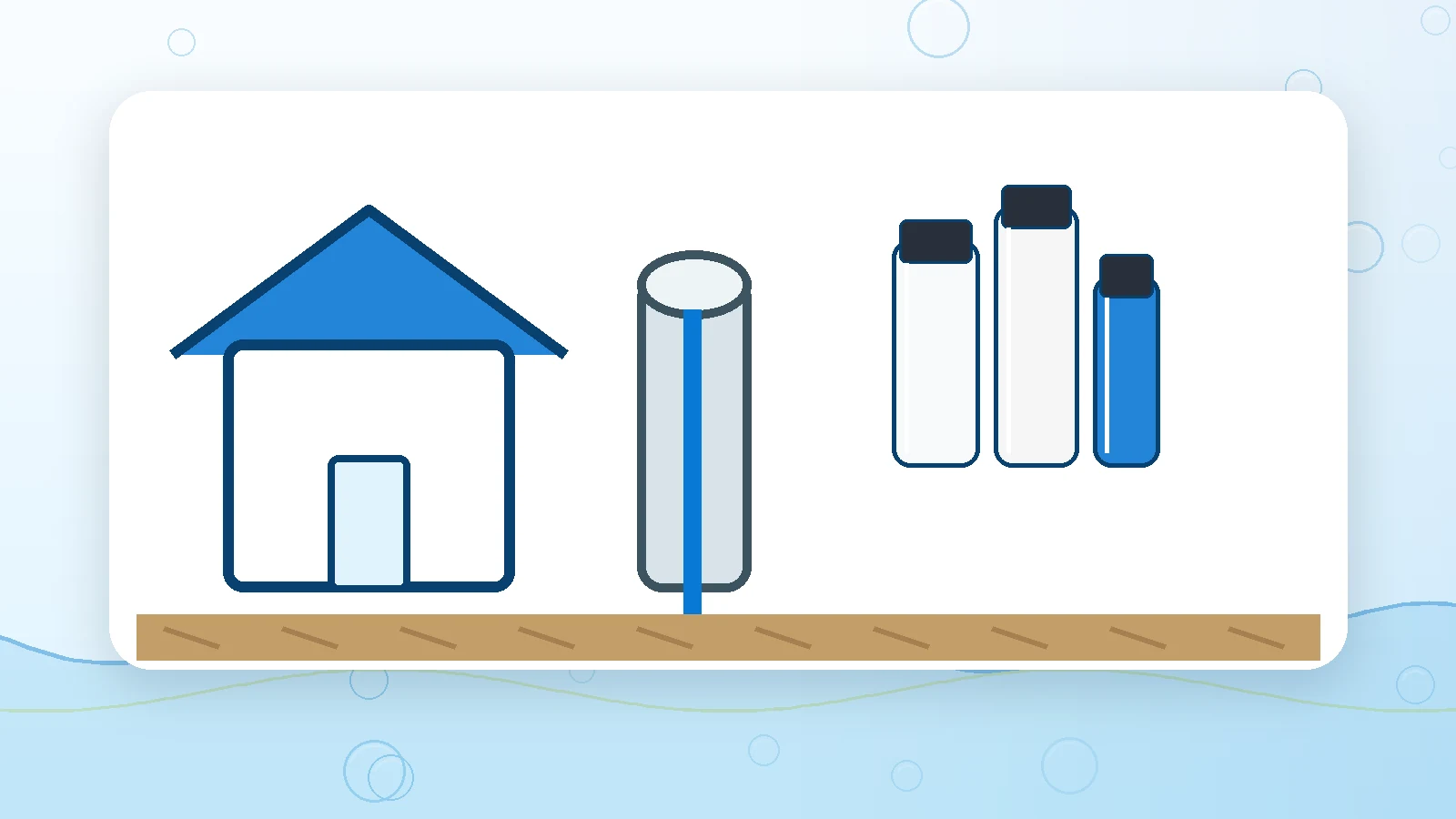
ZeroTrace Water helps homeowners move from water testing to a complete installed solution. Recommendations are matched to the water source, measured concerns, household demand, plumbing conditions, and the exact performance claims of the proposed equipment. Ask for a written proposal covering equipment, installation, startup, maintenance, warranty terms, cash price, and available third-party financing.
Last reviewed: July 26, 2026
Quick answer
Orange or brown stains, black deposits, metallic taste, and rotten-egg odor do not identify one universal well-water problem. In the Louisville area, the source may involve dissolved iron, oxidized iron, manganese, hydrogen sulfide, sulfur-related bacteria, sediment, corrosion, or a water-heater condition. Test the raw well water, compare hot and cold fixtures, inspect the well and plumbing, and measure pH, iron, manganese, sulfur-related parameters, hardness, bacteria, and flow before selecting treatment. The correct system may use oxidation, aeration, catalytic media, backwashing filtration, disinfection, or another staged process, but the exact chemistry and hydraulic demand control the design.
What do stains and odors actually tell you?
Symptoms are useful clues, not final diagnoses. Orange, red, or brown staining often points toward iron. Dark brown or black staining can involve manganese. A rotten-egg odor may involve hydrogen sulfide gas, sulfur-related bacteria, a drain, or the water heater. Cloudiness or particles may be oxidized minerals, sediment, corrosion, or a well problem. More than one condition can occur at the same time.
EPA's private-well guidance recommends testing for iron, copper, and manganese when fixtures or laundry are stained, and for hydrogen sulfide, corrosion, or metals when taste or odor is objectionable. Kentucky groundwater resources also describe iron, hardness, and sulfur-related conditions as common concerns in parts of the state. The actual Louisville-area property still needs its own test.
First separate hot-water, cold-water, and drain odors
Run the cold water and use a clean glass away from the sink. Then compare the hot water. If the odor occurs only in hot water, the water heater, temperature, or anode can be involved. If it occurs only at one sink and not in the glass, the drain may be the source. If it is present in raw cold water throughout the home, the well, pressure system, or source-water chemistry becomes more likely.
This simple localization step prevents a homeowner from buying a whole-house sulfur system for a heater or drain problem. It should be recorded along with when the odor appears, whether it changes after flushing, whether the well was recently serviced, and whether the condition follows rain, flooding, or seasonal changes.
Which laboratory and field measurements matter?
- Total and dissolved iron, because clear-water iron and visible oxidized particles behave differently.
- Manganese, which can create dark staining and can require different oxidation conditions than iron.
- pH, alkalinity, hardness, and total dissolved solids, because they affect oxidation, media selection, corrosion, and softener performance.
- Hydrogen sulfide or an appropriate sulfur-odor investigation, recognizing that collection and preservation can be difficult.
- Total coliform and other microbiological tests when odor, slime, well condition, or health concerns justify them.
- Flow, pressure, well yield, pump capacity, and backwash capability for the proposed equipment.
- Raw-water and treated-water sample locations so performance can be evaluated after installation.
How do common treatment approaches differ?
Oxidation converts dissolved minerals or gases into forms that can be separated or filtered. The oxidant may be air, chlorine, hydrogen peroxide, ozone, or another method selected for the chemistry and equipment. Filtration then captures the oxidized material. Catalytic media can accelerate reactions, while aeration can release gases and add oxygen. Each method has different space, drain, electrical, chemical, maintenance, and ventilation requirements.
A softener may reduce limited clear-water iron in some applications, but it can foul or fail when iron form, concentration, manganese, sulfur, or bacteria exceed the equipment's conditions. Carbon may improve some odor conditions, but it should not be used as a universal sulfur remedy without defining capacity and microbial risk. Shock disinfection can be appropriate after well correction or for a confirmed microbial issue, but repeated disinfection without identifying the source is not a durable treatment plan.
| Observed condition | Treatment path to investigate | Verification question |
|---|---|---|
| Clear water turns orange after standing | Oxidation followed by backwashing filtration; sometimes model-specific softening for limited clear-water iron. | What are dissolved and total iron, pH, flow, and backwash requirements? |
| Orange particles are already visible | Source inspection, sediment separation, oxidation or filtration sized for solids loading. | Is the material from the well, plumbing corrosion, or prior treatment? |
| Black staining or deposits | Manganese-focused oxidation and filtration, possibly combined with iron treatment. | What are manganese, pH, oxidant demand, and media conditions? |
| Rotten-egg odor in all cold water | Hydrogen-sulfide diagnosis, aeration or oxidation, catalytic media, and microbiological evaluation. | Is the source gas, sulfur-related bacteria, or another compound? |
| Odor only in hot water | Water-heater inspection, temperature and anode evaluation, plumbing service. | Does raw cold water have the odor? |
| Slime, rapid fouling, recurring odor | Well inspection, microbiological testing, cleaning or disinfection, then treatment redesign. | Is there iron or sulfur bacteria, and has the source been corrected? |
Why flow and backwash sizing matter
Many iron and manganese filters must backwash at a specific flow to lift and clean the media. If the well, pump, pressure tank, plumbing, or drain cannot support that rate, the bed can foul and treatment can fail. The service flow must also support simultaneous household use without excessive pressure loss. The proposal should state both the continuous service rating and the backwash requirement.
Large equipment is not automatically safer. Oversizing can create long stagnation, inefficient backwash, poor oxidant control, and higher cost. Undersizing can cause breakthrough, pressure loss, frequent regeneration, or media failure. Use measured peak demand and actual well hydraulics.
What should the proposal and commissioning record include?
The written proposal should identify the raw-water results, treatment goals, stage order, complete equipment models, media, oxidant or air system, tanks, pumps, electrical needs, drains, bypasses, pressure loss, service flow, backwash rate, chemical use, residual handling, maintenance, replacement parts, warranty, and who is responsible for each part of the work.
Commissioning should record settings, tank volumes, draw and feed rates, pressure, flow, backwash performance, drain condition, flush completion, leaks, treated-water appearance and odor, and raw-versus-treated test results when appropriate. The homeowner should receive a schedule based on gallons, time, pressure, chemical use, test results, or another measurable trigger.
Frequently asked questions
Is iron in well water dangerous?
Iron is often an aesthetic and operational problem involving staining, taste, fouling, and plumbing. A laboratory result should still be interpreted with health and local guidance, especially when other metals or bacteria may be present.
What causes rotten-egg smell in well water?
Possible causes include hydrogen sulfide in the source, sulfur-related bacteria, a water-heater condition, or a drain. Compare hot and cold water and use testing and inspection before selecting treatment.
Will a water softener remove iron and sulfur?
A softener can sometimes reduce limited clear-water iron under specified conditions, but it is not a universal iron, manganese, or sulfur system. The exact water chemistry and model limits control.
Do I need chlorine injection?
Chemical oxidation may be appropriate for some iron, manganese, sulfur, or microbiological conditions, but the dose, contact time, residual, storage, safety, and downstream filtration must be professionally designed.
Why does the odor return after treatment?
Common reasons include exhausted or fouled media, incorrect settings, inadequate contact time, low oxidant feed, insufficient backwash, a water-heater source, bacteria, or a changed raw-water condition.
Should the well be repaired before treatment?
Yes when inspection identifies construction, sealing, drainage, pump, casing, or contamination problems. Treatment should not be used to hide a correctable source defect.
A clearer next step
Document the symptoms, compare hot and cold water, obtain a certified raw-water analysis, and record the well's hydraulic capacity before comparing iron or sulfur equipment. ZeroTrace Water should market this page only within verified service coverage and should not claim to perform well repair, laboratory analysis, chemical feed service, or installation until the responsible qualified parties are contracted and disclosed.
Related resources
- Iron and manganese in well water
- Rotten egg smell in well water
- Private well water treatment in the Louisville area
- Private well water testing
- Water treatment stages
- Water treatment system commissioning checklist
Questions homeowners often ask
Is iron in well water dangerous?
Iron is often an aesthetic and operational problem involving staining, taste, fouling, and plumbing. A laboratory result should still be interpreted with health and local guidance, especially when other metals or bacteria may be present.
What causes rotten-egg smell in well water?
Possible causes include hydrogen sulfide in the source, sulfur-related bacteria, a water-heater condition, or a drain. Compare hot and cold water and use testing and inspection before selecting treatment.
Will a water softener remove iron and sulfur?
A softener can sometimes reduce limited clear-water iron under specified conditions, but it is not a universal iron, manganese, or sulfur system. The exact water chemistry and model limits control.
Do I need chlorine injection?
Chemical oxidation may be appropriate for some iron, manganese, sulfur, or microbiological conditions, but the dose, contact time, residual, storage, safety, and downstream filtration must be professionally designed.
Why does the odor return after treatment?
Common reasons include exhausted or fouled media, incorrect settings, inadequate contact time, low oxidant feed, insufficient backwash, a water-heater source, bacteria, or a changed raw-water condition.
Should the well be repaired before treatment?
Yes when inspection identifies construction, sealing, drainage, pump, casing, or contamination problems. Treatment should not be used to hide a correctable source defect.