
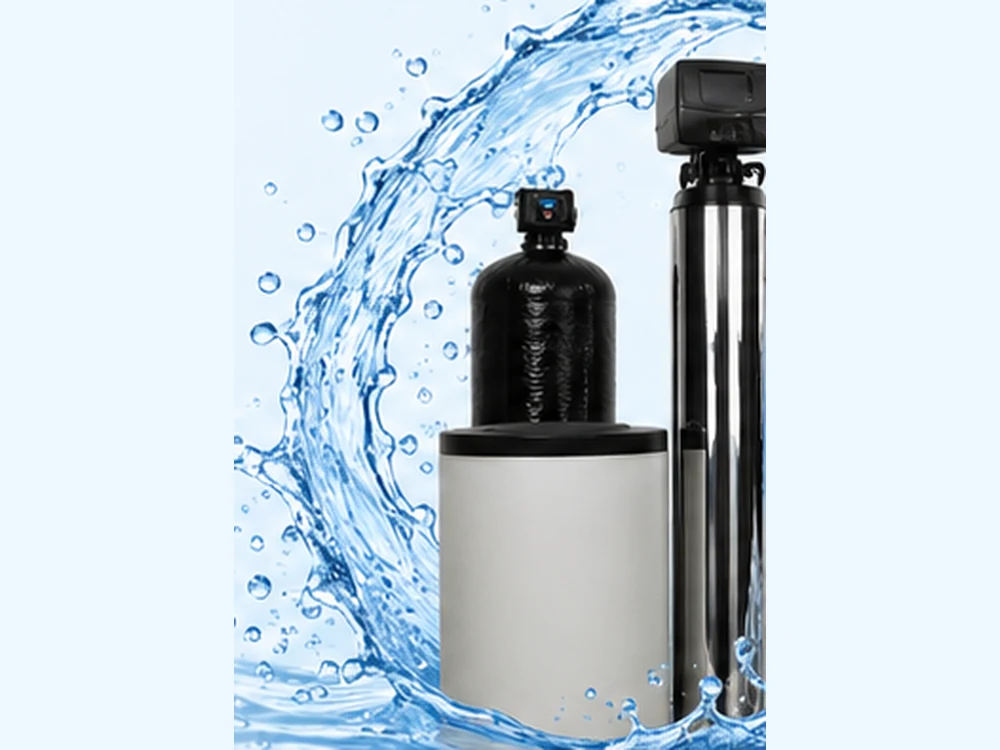
ZeroTrace Water helps homeowners move from water testing to a complete installed solution. Recommendations are matched to the water source, measured concerns, household demand, plumbing conditions, and the exact performance claims of the proposed equipment. Ask for a written proposal covering equipment, installation, startup, maintenance, warranty terms, cash price, and available third-party financing.
Last reviewed: July 25, 2026
Quick answer
A water softener reduces hardness minerals, usually calcium and magnesium, through ion exchange. The correct Louisville system should be chosen from a current hardness measurement at the property, household water use, peak flow, plumbing size, and the equipment's verified capacity and efficiency. A softener is designed mainly for scale and hardness management; it is not a universal contaminant-removal system. Before buying, the homeowner should understand salt or potassium use, regeneration water, drain requirements, pressure drop, maintenance, and whether a different scale-control approach would better match the goal.
What is hard water?
Hardness is the concentration of dissolved calcium and magnesium in water. It is commonly reported as milligrams per liter as calcium carbonate or grains per gallon. One grain per gallon is approximately 17.1 milligrams per liter as calcium carbonate. Hardness is mainly an aesthetic and operational property rather than proof that water is unsafe.
Common household signs include mineral spotting, scale on fixtures, reduced soap lather, film on glassware, buildup in water heaters, and deposits on heating elements. Those signs can support a hardness investigation, but they do not replace a measurement. White deposits may also involve other dissolved minerals, and poor cleaning results can have causes unrelated to water treatment.
A Louisville homeowner should use a current result from the actual property. Utility data can provide system context, but building plumbing, source changes, blending, and sampling location can affect the number used for sizing. The recommendation should record the unit, date, sample point, and whether the result represents raw or already treated water.
How does a conventional water softener work?
A conventional softener passes water through cation-exchange resin. Calcium and magnesium ions are exchanged for sodium or potassium ions. When the resin's working capacity is used, the control valve regenerates the bed with a brine solution, rinses the resin, and returns the unit to service. The system's real efficiency depends on resin volume, programmed hardness, reserve setting, salt dose, flow, water use, and valve performance.
NSF/ANSI 44 is the primary standard for residential cation-exchange water softeners regenerated with sodium or potassium chloride. The standard addresses issues such as hardness reduction, materials, structural integrity, pressure drop, capacity, rinse effectiveness, and brine-system accuracy. Certification still applies to an exact model and should be verified in an official listing.
A softener should not be described as removing every contaminant. It may reduce certain ions under specific listed claims, but its core job is hardness reduction. Chlorine taste, lead, PFAS, sediment, microorganisms, nitrate, and volatile organic compounds require separate evaluation and may require different technologies.
How should a Louisville water softener be sized?
Sizing begins with measured hardness, household size, average daily use, peak flow, and any additional loading such as iron or manganese in a private-well application. A simple household-size chart can be a screening tool, but it is not enough for a defensible design. The proposal should show the hardness assumption, estimated gallons per day, usable capacity at the selected salt dose, reserve, expected days between regenerations, service flow, and pressure drop.
Oversizing can create long intervals and stale assumptions, while undersizing can cause frequent regeneration, hardness breakthrough, and excessive salt or water use. The control valve should be programmed from actual conditions rather than a factory default. A metered demand-initiated system can adapt regeneration to water use, but it still needs correct hardness and capacity settings.
The installation location also matters. The system needs a stable floor, accessible main-water connection, bypass, drain, overflow route where specified, electrical outlet for most controls, freeze protection, and service clearance. The route to the drain must follow manufacturer instructions and applicable plumbing requirements.
What does a softener change in the home?
A correctly operating softener can reduce scale formation, improve soap performance, and limit hardness deposits in water-using equipment. Existing scale does not always disappear immediately, and damaged appliances or fixtures may still need cleaning or repair. Homeowners should use realistic expectations instead of promises about health, energy savings, skin conditions, or appliance life that are not supported by the exact situation.
Softened water usually contains more sodium or potassium than the untreated water because of ion exchange. The amount depends on the original hardness and regenerant. Households with medically directed sodium restrictions should discuss drinking-water choices with a qualified health professional. A common design is to soften hot and household water while using a separate drinking-water arrangement, but the plumbing plan should be property-specific.
Outdoor irrigation, hose bibs, pools, and some specialty uses may be bypassed to avoid unnecessary soft water and salt consumption. A responsible recommendation should not present one plumbing route as universal. The installer should document which fixtures are treated and which are bypassed.
Salt-based softener or salt-free scale control?
Salt-based ion exchange removes hardness ions from the treated stream and is the conventional choice when the goal is measurable hardness reduction. Salt-free products generally use another mechanism intended to alter scale behavior or protect equipment. They do not necessarily produce soft water, and claims vary widely. The recommendation should state whether the device reduces measured hardness or only carries a verified scale-reduction claim.
The best comparison uses the homeowner's goal. If the goal is lower hardness at the tap, reduced soap use, or a measurable grains-per-gallon result, ion exchange may be the appropriate category. If the goal is limited scale management without brine discharge, an alternative may be considered, but its exact certification, flow, media life, water chemistry limits, and expected result must be clear.
Maintenance and local service planning
Routine ownership can include checking salt level, breaking up salt bridging when safely appropriate, cleaning the brine system under the manufacturer's procedure, replacing prefilters, inspecting the drain line, confirming the programmed hardness, and testing treated water for breakthrough. The schedule depends on the exact model and water conditions. A service agreement should identify what is included, what triggers a visit, parts coverage, response expectations, and exclusions.
One canonical Louisville softener page can support the verified service area without creating thin city copies. Local examples may include scale concerns in St. Matthews and Middletown kitchens, water-heater protection in Jeffersontown and Fern Creek, or compact installation spaces in older Highlands homes. These examples should be based on actual service availability and should not imply a storefront or office in every named area.
Softener sizing record
| Input | Record |
|---|---|
| Hardness | Result, unit, sample point, date, raw or treated. |
| Household demand | Occupants, typical gallons, high-use fixtures, peak simultaneous flow. |
| Equipment capacity | Resin volume, usable grains at selected salt dose, reserve. |
| Regeneration | Metered or timed, estimated frequency, salt and water per cycle. |
| Hydraulics | Pipe size, service flow, pressure drop, drain capacity. |
| Treatment boundaries | Fixtures treated, drinking-water bypass, irrigation bypass. |
| Verification | Treated hardness target, test method, service trigger. |
Frequently asked questions
Is Louisville water hard enough to need a softener?
Need is a household decision, not a citywide conclusion. Test the property and define the goal. A homeowner who sees scale or soap inefficiency may value softening, while another household may decide the maintenance and salt use are not necessary.
Does a water softener remove chlorine, lead, or PFAS?
A conventional softener is designed mainly for hardness. Do not assume it removes chlorine, lead, PFAS, microorganisms, or every dissolved contaminant. Those goals require separate verified treatment claims.
How large should my water softener be?
Size from measured hardness, water use, peak flow, usable capacity at the selected salt dose, and expected regeneration frequency. Tank size or marketing grain capacity alone is not enough.
How much salt will a softener use?
Salt use depends on hardness, water demand, resin capacity, programmed dose, reserve, efficiency, and regeneration frequency. A proposal should estimate annual use from stated assumptions rather than promise one universal amount.
Is salt-free water treatment the same as softening?
Usually not. Many salt-free devices are scale-control systems and do not remove calcium and magnesium or produce a lower hardness test result. Verify the exact claim and choose it only when that result matches the goal.
Can I drink softened water?
Many households do, but ion exchange adds sodium or potassium in proportion to the removed hardness. Anyone with a medically directed restriction should discuss the choice with a qualified health professional and consider a separate drinking-water configuration.
A clearer next step
Start with the household's actual question, the correct local record or test, and the exact result expected from treatment. ZeroTrace Water is building an education-first Louisville service pathway that is designed to document the recommendation, the equipment claim, the responsible installer, the maintenance plan, and the limits of the system. Current availability, installation coverage, warranties, financing options, and response expectations are confirmed directly before any commitment.
Related resources
- How a water softener works
- Whole-house water filter sizing
- Water treatment stages
- Five-year water treatment cost
- Water filter maintenance log
- Compare water treatment quotes
Questions homeowners often ask
Is Louisville water hard enough to need a softener?
Need is a household decision, not a citywide conclusion. Test the property and define the goal. A homeowner who sees scale or soap inefficiency may value softening, while another household may decide the maintenance and salt use are not necessary.
Does a water softener remove chlorine, lead, or PFAS?
A conventional softener is designed mainly for hardness. Do not assume it removes chlorine, lead, PFAS, microorganisms, or every dissolved contaminant. Those goals require separate verified treatment claims.
How large should my water softener be?
Size from measured hardness, water use, peak flow, usable capacity at the selected salt dose, and expected regeneration frequency. Tank size or marketing grain capacity alone is not enough.
How much salt will a softener use?
Salt use depends on hardness, water demand, resin capacity, programmed dose, reserve, efficiency, and regeneration frequency. A proposal should estimate annual use from stated assumptions rather than promise one universal amount.
Is salt-free water treatment the same as softening?
Usually not. Many salt-free devices are scale-control systems and do not remove calcium and magnesium or produce a lower hardness test result. Verify the exact claim and choose it only when that result matches the goal.
Can I drink softened water?
Many households do, but ion exchange adds sodium or potassium in proportion to the removed hardness. Anyone with a medically directed restriction should discuss the choice with a qualified health professional and consider a separate drinking-water configuration.