
Reviewed for clarity: August 08, 2026
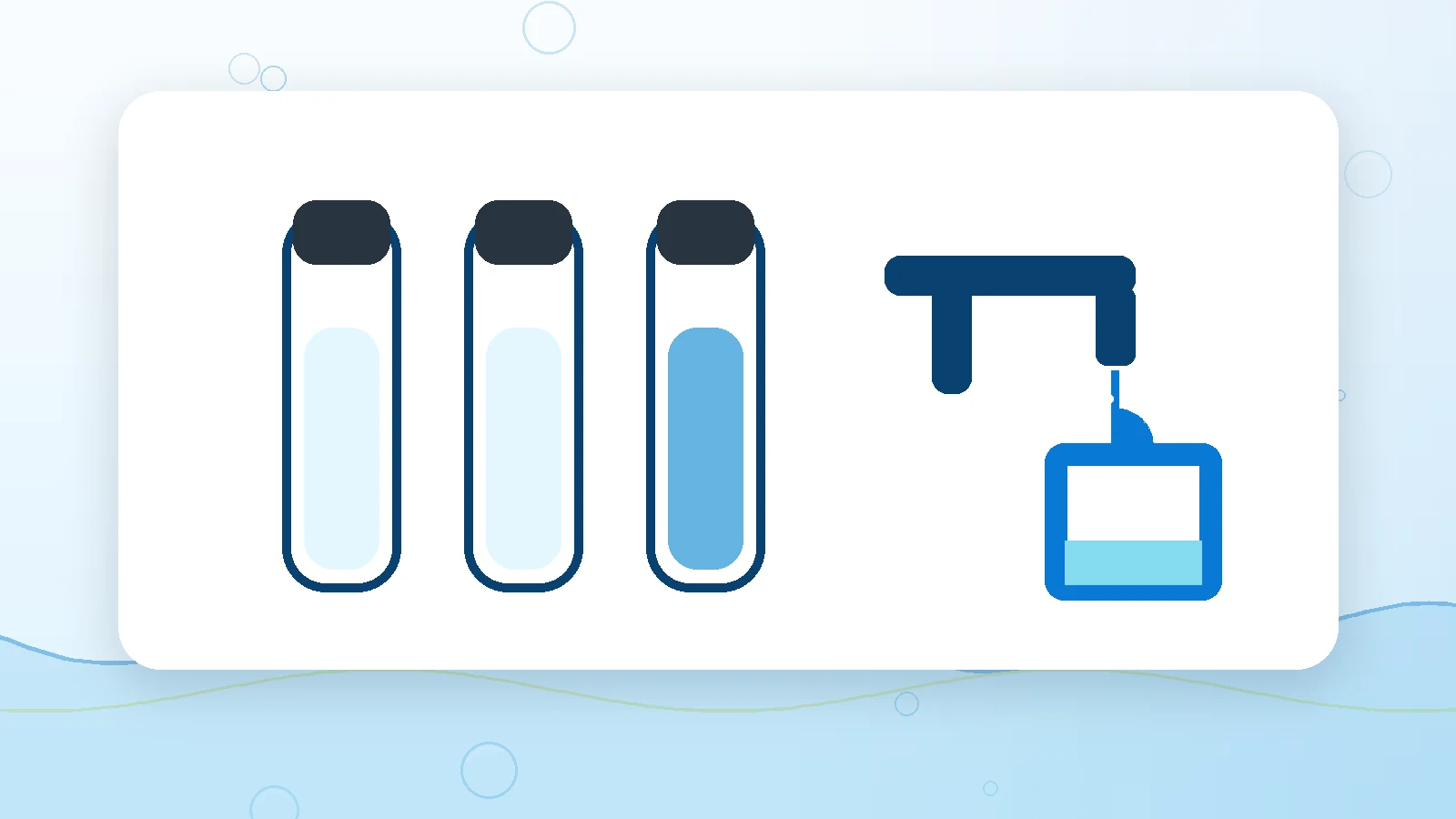
Reverse osmosis separates a product-water stream from a concentrate stream. The ratio varies with system design, pressure, temperature, membrane condition, feed-water chemistry, storage-tank backpressure, and the test method used for the claim.
What this term means
Recovery is the portion of feed water collected as product water. Reject or concentrate water carries away the material that does not pass through the membrane.
This distinction matters because a homeowner may hear a familiar product label and assume it answers every part of the decision. A better comparison links the observed problem, the evidence, the treatment mechanism, the exact complete model, and the maintenance plan.
Why this matters in a real home
A ratio measured at a bench under ideal conditions may differ from a system installed under a kitchen sink with cold water and a nearly full storage tank.
Household conditions can change the result. Flow, pressure, water temperature, source chemistry, plumbing material, stagnation, filter loading, valve position, and service history may all influence performance. Record the conditions when a measurement or observation is made so future changes can be compared honestly.
A practical step-by-step plan
- Confirm whether the stated ratio is laboratory, rated, or field performance.
- Check feed pressure and temperature.
- Verify the membrane, flow restrictor, and storage configuration.
- Measure over a consistent period with the tank condition documented.
- Balance efficiency with membrane protection and verified performance.
Keep the results in a home water record with photos, dates, sample locations, settings, part numbers, and receipts. Documentation is especially useful when several people share maintenance responsibilities or when the home is sold.
Common mistakes to avoid
- Comparing ratios without matching test conditions
- Restricting the drain line to force a better ratio
- Ignoring storage-tank backpressure
- Assuming efficiency alone proves contaminant reduction
Another common mistake is treating marketing language as a technical specification. Terms such as premium, commercial grade, medical grade, lifetime, or complete protection should be translated into exact model numbers, test standards, rated conditions, capacities, and written responsibilities.
Questions to ask a water-treatment provider
- At what pressure and temperature was the ratio measured?
- Is a permeate pump or booster pump included?
- How does a full tank affect the result?
- What recovery range protects the membrane?
- What maintenance changes efficiency over time?
Ask for answers in writing when they affect price, ownership, installation, performance, warranty, or recurring service. If a provider cannot identify the complete model, its claim, and the conditions behind that claim, the proposal is not ready for a decision.
How to verify the recommendation
Verification should match the reason for treatment. A pressure problem may be verified with upstream and downstream gauges at a defined flow. A softener may be checked with hardness before and after treatment at the correct point. Reverse osmosis performance may be monitored with the manufacturer’s specified method and contaminant-specific testing when necessary. A health-based claim requires an appropriate laboratory method and sampling plan.
Do not use a single screening measurement as proof for unrelated substances. A TDS meter cannot verify bacteria, lead, PFAS, or many organic compounds. Taste and appearance are also incomplete indicators. Use the least complicated method that directly answers the defined question.
Maintenance and long-term ownership
Before purchase, identify every recurring cartridge, media, lamp, salt, sanitizing step, test, and service task. Confirm replacement availability and expected labor. Build a five-year cost comparison that includes consumables, professional service, water or energy used by the process, and any required follow-up testing.
After installation, record model numbers, valve positions, settings, startup readings, pressure, flow, service dates, and the next task. A documented baseline makes it easier to distinguish normal aging from a sudden problem.
Frequently asked questions
Is reject water wasted?
It is part of the separation process and carries concentrated material to the drain. Some households may reuse it only where local rules and the water quality make that appropriate.
Can I close the drain line to save water?
No. Restricting or closing the concentrate path can damage performance and the membrane.
Do tankless systems always have the best ratio?
Not automatically. Compare verified conditions, production, pressure, replacement cost, and the complete system claim.